
Lessons from National Retailers
I launched my business in 2005 to help investors acquire income-producing properties while saving them time and money. I adopted retail chain stores' proven strategies for location selection and customer analysis, and applied these principles to the residential rental market. It worked.

[Image generated with Dall-E]
In 2004, I was living in NYC, managing an international sales team. I decided to exit the corporate world and create a business that would provide sufficient income while helping others. My frustrating experience with “investor-friendly” realtors, who offered little beyond MLS data sheets, showed me how inefficient and risky the current real estate investing process was.
As an engineer, I knew I could build software and processes to consistently help clients acquire high-performing properties that delivered reliable passive income without the hassle of learning or managing investments. My ideal client? Someone with the cash and credit to invest but no time for a second job—they wanted income, not extra work.
I started by reading all the popular investment books. To my surprise, I discovered only a sea of self-professed gurus touting their opinions as facts. They peddled clichés like “secrets the wealthy don’t want you to know.” However, I couldn’t find any factual, proven processes or analytics that made sense.
Frustrated, I turned to the commercial real estate world. There, I discovered that national retailers like Whole Foods, 7-Eleven, and Barnes & Noble use data and processes, not guesswork, to select and stock profitable stores.
I realized these methods could be applied to residential real estate investing. By focusing on my rental property “customers” — the tenants — I developed software and processes to consistently deliver reliable income-producing properties to investors worldwide. This data-driven approach became the cornerstone of my business, helping clients achieve dependable passive income with minimum hassle.
National Retail Store Processes
After studying multiple national retail chains, I discovered that their approach to choosing cities, store locations, and inventory followed a well-defined and repeatable process, focused on long-term profitability, not day one sales. Here are the steps most chains follow.
- Location Selection: They select cities that are thriving today and show strong potential for long-term growth.
- Well Defined Customer: Successful national chains deeply understand their customers and recognize how preferences vary by location. A product line that thrives in New York City may not work in rural areas.
- Store Placement: Once they know their local customer characteristics, they place stores in areas with high concentrations of their target demographic.
- Localization: Stores adapt their layout and products to match what local shoppers want. For example, if local customers select where to shop based on watermelon availability and price, the store will put watermelons in prominent spots and advertise them heavily.
Lessons From National Retail Store Chains
Let data guide your decisions, not the opinions of gurus.
1) Select a High-performance Market
I’ve covered how to select a good investment city, so I won’t repeat the process here. In summary, look for a city that’s thriving today and shows strong potential for future growth.
2) Target the Right Segment
Retail stores generate income from customers, not the store itself. Similarly, properties don’t pay rent; the tenants do. Successful retailers research demographics to find ideal locations, design stores to attract their target customers, and stock goods that meet their needs.
The same principle applies to property investment. To succeed, you must attract tenants with the right financial traits, those who stay many years, pay rent on schedule, and take good care of the property.
In 2005, I applied retail strategies to real estate, analyzing rental data and interviewing property managers to identify ideal tenant profiles. This research shaped what I call a property profile.
- Type: Single-family and select townhomes
- Configuration: 3+ bedrooms, 2+ baths, 2+ car garages, 1,100 to 2,400 SF, one or two stories, lot size 3,000 SF to 6,000 SF.
- Rent range: $1,800/Mo to $2,300/Mo
- Location: See the map below for the general areas
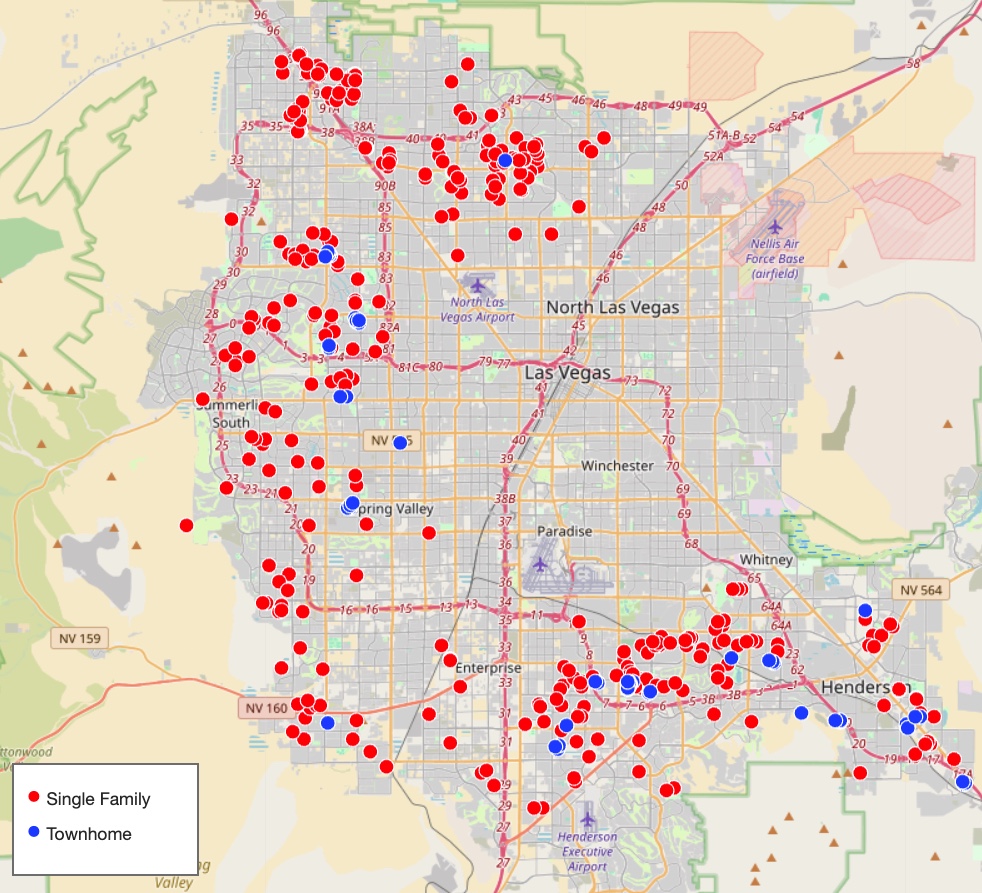
Rather than arbitrarily choosing properties, I followed the retail store approach. I identified a tenant segment with the right behaviors and studied where and what they were renting. We then recommend purchasing similar properties.
3) Renovate for Your Target Tenants
Just like the national retailers decorate and stock their stores for their target customers, renovate your properties to attract your target tenant segment. I’ve written an entire blog series on how to renovate rental properties for your target tenants. Here is one of them – Optimizing Rental Property Renovations: What to Install?
Did the Retail Store Method Work?
Over 17+ years using this retailer-inspired approach, here’s what we’ve accomplished:
- 2008 crash: Zero decline in rent, zero vacancies.
- COVID-19 pandemic: Almost no impact.
- Eviction moratorium: Almost no impact.
- Average tenant stays over five years.
- In over 17 years and more than 1,000 tenants, we’ve only had seven evictions.
- Our vacancy rate is less than 2%.
- From 2013 to today, annual appreciation and rent growth averaged over 10% and 8%, respectively.
Final Thoughts
National retailers succeed by focusing on their customers and letting data, not opinions, drive every decision. If your goal is financial independence, adopt their methods. Select properties based on your target tenant segment. Let their requirements and desires dictate your investments. The result? A portfolio with rapid appreciation and rent growth that performs in both good times and bad.
Related insights
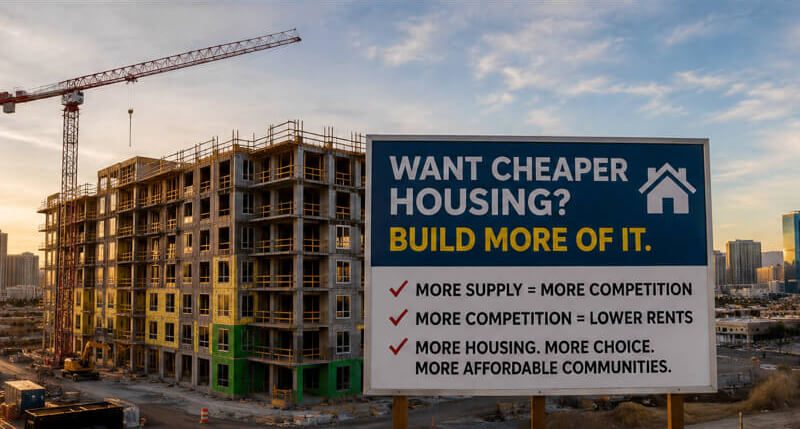
The Affordability Fix Nobody Wants to Talk About — and Why It Won’t Reach Our Target Market
Building more homes is the most effective way to improve housing affordability. But in the Las Vegas segment we target, scarce land and high…

Is Las Vegas Running Out of Water? Why Its Water Supply Remains Secure
Is Las Vegas running out of water? Despite falling Lake Mead levels, Southern Nevada has spent decades preparing for drought. Deep-water intakes, major pumping…

Should You Hold Your Nevada Rental Property in an LLC? What to Check Before You Transfer Title
Thinking about moving a Nevada rental property into an LLC? Before you transfer the deed, understand the potential effects on your mortgage, title insurance,…
Thinking about a Las Vegas rental?
A 30-minute conversation about your goals: whether Las Vegas fits your strategy, what a first property costs, and what the process looks like.
- We learn your goals and make sure we’re the right fit
- You get a clear picture of cash requirements and realistic returns
- You leave with next steps, whether or not you work with us