
Frustrated by High Interest Rates? Review Your Options
Buy or wait. A constant question in the current high interest rate environment. In this article, I talk abou the tradeoffs of waiting.
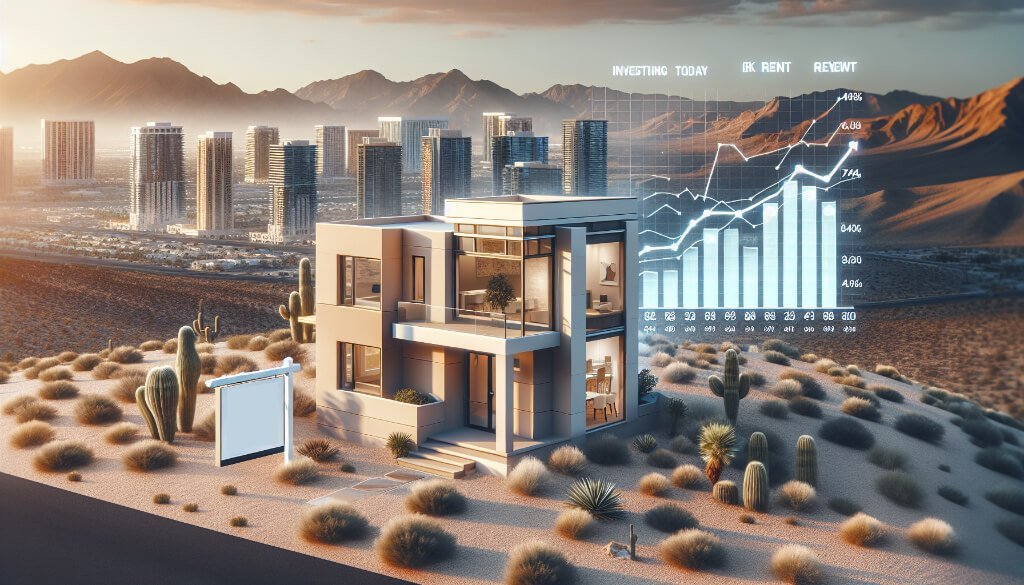
[Image generated with Dall-E]
Investing in real estate during the current high interest rates can be frustrating, but delaying your investment might cost you more in the long run. Here’s why:
Financial Impact of Waiting
If you bought a $400,000 property today with 30% down, your down payment would be $120,000. Assuming a 7.5% interest rate, your principal and interest (P&I) payment would be $1,958/Mo.
What happens if you wait three years for interest rates to drop to, say, 5%? Let’s look at potential property appreciation:
(In our 2024 Las Vegas Investor Outlook, I stated that I expect our next 5-year average appreciation rate to be over 11% and the rent growth rate to be ~8%, and why.)
Market Value After 8% Annual Appreciation:
- After one year: $432,000
- After two years: $466,560
- After three years: $503,885
Market Value After 10% Annual Appreciation:
- After one year: $440,000
- After two years: $484,000
- After three years: $532,400
If you wait three years and interest rates drop to 5%, your 30% down payment would be:
- 8% appreciation: $151,166
- 10% appreciation: $159,720
Note: When interest rates decrease in the future, you can make a smaller down payment, such as 25%. However, your loan amount will be larger, and obtaining a loan at that time may involve points or other costs that we cannot predict. Therefore, I used a 30% future down payment to simplify things.
Principal and Interest Payments After Three Years:
- At 8% appreciation at 5% interest: $1,895 per month
- At 10% appreciation at 5% interest: $2,001 per month
Loss of Equity by Waiting:
- If 8% appreciation: $103,885
- If 10% appreciation: $132,400
Buy Now, Refinance in the Future
If you purchase the property today for $400,000 and refinance after three years at 5%, your P&I would be $1,503/Mo. The result would be significantly higher cash flow. Additionally, you would have accumulated equity, cash flow, and tax savings.
Rent Growth:
Assuming an initial rent of $2,000 per month with an 8% annual increase:
- After one year: $2,160
- After two years: $2,333
- After three years: $2,519
Summary of Financial Impact:
Waiting three years for lower interest rates means:
- At 8% appreciation:
- Equity loss: $103,885
- Increased down payment: $31,166
- Loss of rent (as rent rises, properties have increased cash flow.)
- Loss of tax savings
- At 10% appreciation:
- Equity loss: $132,400
- Increased down payment: $39,720
- Loss of rent (as rent rises, properties have increased cash flow.)
- Loss of tax savings
Options
Here are what I believe to be the available options for investors.
- Do not buy real estate: This means missing out on the most proven method of financial freedom. I’ve discussed alternatives to real estate with many clients, but none have found a good alternative.
- Buy real estate in low-cost locations: These areas may offer initial positive cash flow and cheaper properties. However, appreciation and rent increases in these areas are around 1%. If (real) inflation is 5%, the buying power of your rent and the equity you invested in these properties will decrease by about 4% per year. See “The Allure of Low-cost Markets” and “Why Low-Cost Properties Are the Most Expensive.”
- Buy real estate today and accept initial negative cash flow: Many clients are adopting this strategy. They believe that with rising rents and property prices, they will achieve positive cash flow within one or two years.
- Buy real estate today and put more money down: Most clients are putting down between 30% and 35%, depending on the property and interest rate, to achieve positive or zero cash flow.
- Wait until interest rates fall: Property prices are rising, so waiting might cost you more even after interest rates decrease.
Keep in mind that if you do not have sufficient funds to acquire and renovate a property, plus a comfortable reserve in case of an emergency, do not do it.
Conclusion:
Investing in real estate during high interest rates can be frustrating, especially compared to the investing environment before the interest rate hikes. But we are now in a new era, and waiting can lead to a significant loss of returns. By taking action now, you will benefit from property appreciation, rent growth, and tax savings, setting yourself up for future financial success.
Related insights
The Affordability Fix Nobody Wants to Talk About — and Why It Won’t Reach Our Target Market
Building more homes is the most effective way to improve housing affordability. But in the Las Vegas segment we target, scarce land and high…
Is Las Vegas Running Out of Water? Why Its Water Supply Remains Secure
Is Las Vegas running out of water? Despite falling Lake Mead levels, Southern Nevada has spent decades preparing for drought. Deep-water intakes, major pumping…

Should You Hold Your Nevada Rental Property in an LLC? What to Check Before You Transfer Title
Thinking about moving a Nevada rental property into an LLC? Before you transfer the deed, understand the potential effects on your mortgage, title insurance,…
Thinking about a Las Vegas rental?
A 30-minute conversation about your goals: whether Las Vegas fits your strategy, what a first property costs, and what the process looks like.
- We learn your goals and make sure we’re the right fit
- You get a clear picture of cash requirements and realistic returns
- You leave with next steps, whether or not you work with us