
Most investors focus on finding a good deal.
But the outcome of a real estate investment is not determined when you buy the property.
It is determined by what happens after you go under contract.
Once your offer is accepted, two processes begin at the same time:
- Closing the purchase
- Preparing the property for a tenant
This guide walks through that process step by step and shows where risk is reduced and where performance is created.
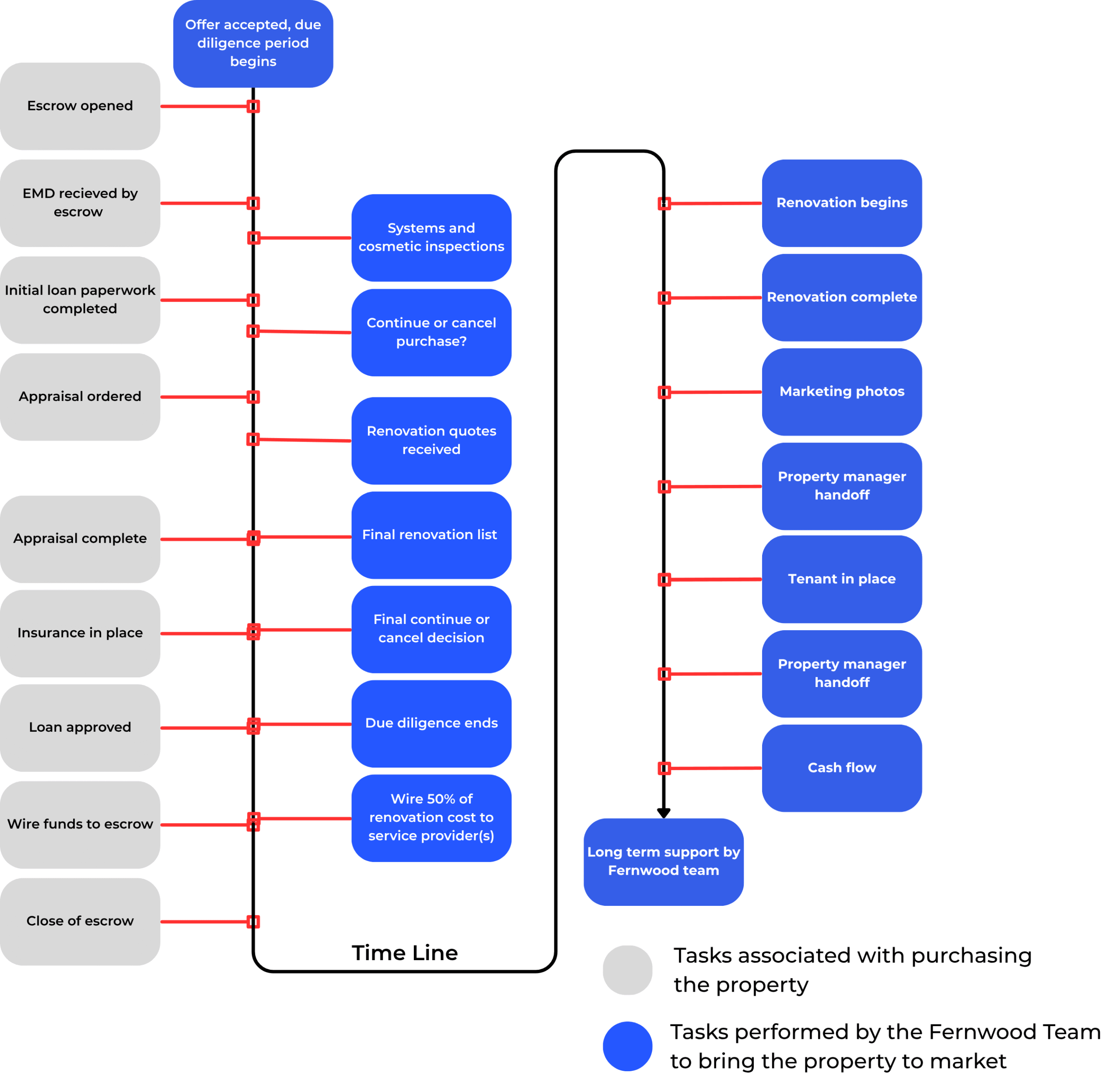
The Full Timeline from Contract to Cash Flow
- Grey steps are required to close the purchase
- Blue steps are what we manage to bring the property to market
Phase 1 – Due Diligence (Risk Control)
This is the most important phase of the entire process.
During due diligence, you validate the property and decide whether to proceed or cancel the purchase.
Key steps include:
- Systems inspection (risk: HVAC, roof, plumbing, electrical)
- Cosmetic evaluation (rentability: what drives rent and tenant demand)
- Renovation scope and quotes
- The final continue or cancel decision
At this stage, you can cancel the purchase and have your earnest money returned.
This is where risk is reduced.
Phase 2 – Closing (Execution Discipline)
This includes:
- Escrow
- Earnest money deposit (EMD)
- Loan and appraisal
- Insurance in place
- Final funding
- Close of escrow
This part is standardized.
Most issues here are caused by:
- Missing deadlines
- Delayed paperwork
- Lender operational (in)efficiency
- Escrow operational (in)efficiency
- Wiring delays/errors
This phase requires discipline, not guesswork. We use a 60+ item closing checklist to minimize issues during the closing process.
Phase 3 – Bringing the Property to Market (Performance Creation)
After closing, the focus shifts from transaction to performance.
This phase determines how the investment actually performs.
Steps include:
- Renovation begins and is actively managed
- Renovation completed and verified
- Professional marketing photos
- Property manager handoff
- Tenant placement
- Cash flow begins
This phase determines:
- How quickly the property rents
- The rent amount
- Tenant quality
- Long-term performance
This is where the outcome is created.
Where Most Investors Go Wrong
Most investors spend nearly all of their time trying to find a good deal.
But:
- They underestimate due diligence
- They rush the renovation process
- They treat tenant placement as an afterthought
As a result, performance suffers even if the purchase looked good.
Buying the property is only one part of the process. Preparing it for the right tenant is what drives the result.
Process Determines Outcome
The timeline reveals a simple truth:
- Risk is managed during due diligence
- The transaction happens during closing
- Results are created after closing
The property itself does not determine the outcome.
The process does.
If you are evaluating your next investment property, this is the process we use to reduce risk and produce consistent results.