


[Generated with Gemini]
Important: I am not a tax professional or an attorney. Tax laws are complex, highly specific to your individual situation, and subject to change. Consult with a qualified tax advisor before making any investment or tax-related decisions.
Most high-earning professionals like the idea of Real Estate Professional Status (REPS) so they can deduct losses against their regular income. That is until they see the requirements. To qualify as a real estate professional, the IRS requires that you:
-
Spend at least 750 hours per year in real estate activities. This averages out to about 14.5 hours per week, every week of the year.
-
Spend more than 50% of your total working time in real estate activities. This ensures that real estate is your primary profession. For most professionals, this requirement is nearly impossible to achieve.
A Better Way
The good news is that you don’t need REPS to save money on taxes with real estate. There are two easier strategies that many investors use instead: cost segregation and the
-
The STR “Loophole” – Under the new tax bill, if a property’s average stay is seven days or less, the IRS treats it as a business rather than a rental. Under current tax rules, this can allow losses to offset W-2 income with far fewer hours than REPS—often around 100 hours of participation. This would still require some time and effort (much less than REPS). However, if you buy a high-quality long-term rental property, you can later convert it to a long-term rentals after capturing the early tax benefits in years one or two. [, , ]
-
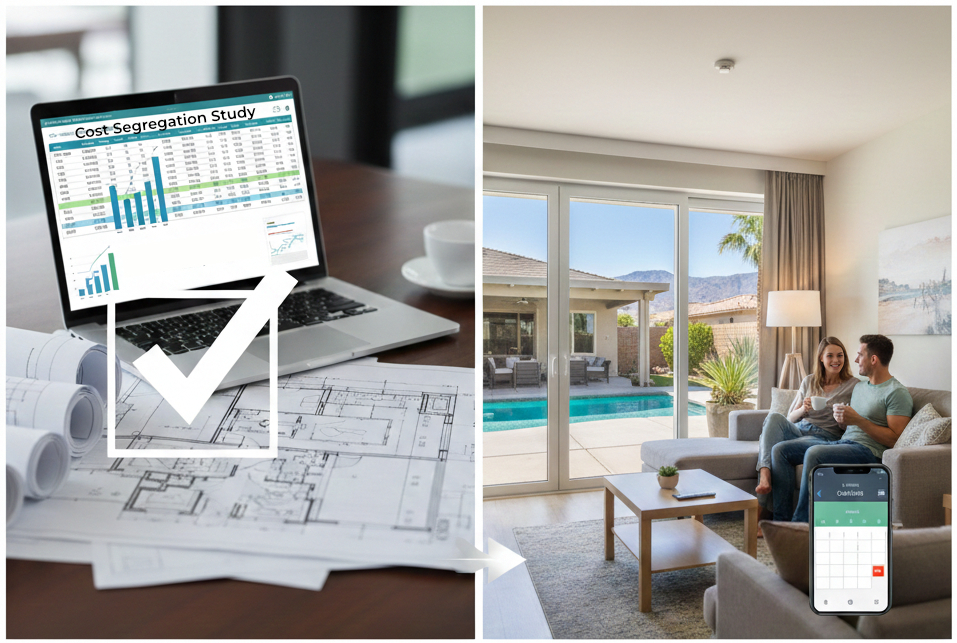
Cost segregation accelerates depreciation by reclassifying parts of a property into shorter-lived assets. This creates large upfront tax deductions without requiring you to manage properties yourself or change your work life. It’s especially effective for high-income W-2 earners and allows the investment to remain mostly passive. I listed three options below. Next week, I will go into more detail about cost segregation and its potential financial impact.
Cost Segregation Study Options
There are three primary options for a cost segregation study: a software DIY approach or hiring a company to conduct the study. []
| Feature | Desktop / Software Study | Hybrid (Remote Engineering) | Full Engineering Study |
|---|---|---|---|
| Typical Cost | $450 – $1,000 | $1,500 – $3,000 | $5,000 – $15,000+ |
| Methodology | Statistical Modeling: Uses algorithms and “residual” estimates based on ZIP code data. | Virtual Engineering: A human engineer reviews your property photos and measurements remotely. | Detailed Engineering: Hand-calculated costs from blueprints, invoices, and physical site visits. |
| IRS Defense | Low to Moderate: Often lacks the “engineering detail” the IRS Audit Guide prefers. | Strong: Includes a professional engineer’s report and audit support from the firm. | Gold Standard: Includes full “Audit Defense” where the firm represents you to the IRS. |
| Typical Benefit | Conservative (~15–22% reclassification). | Balanced (~25–35% reclassification). | Maximized (~30–50% reclassification). |
| Best For | Properties under $500k in basis with simple layouts. | Short-Term Rentals and Single-Family Homes ($500k–$1.5M). | Large luxury estates, multi-unit buildings, or complex commercial assets. |
| Sample provider for more information | KBKG | Titan Echo | Veritax Advisors |
Bottom Line
Get weekly insights like this and learn how professionals build income safely.